
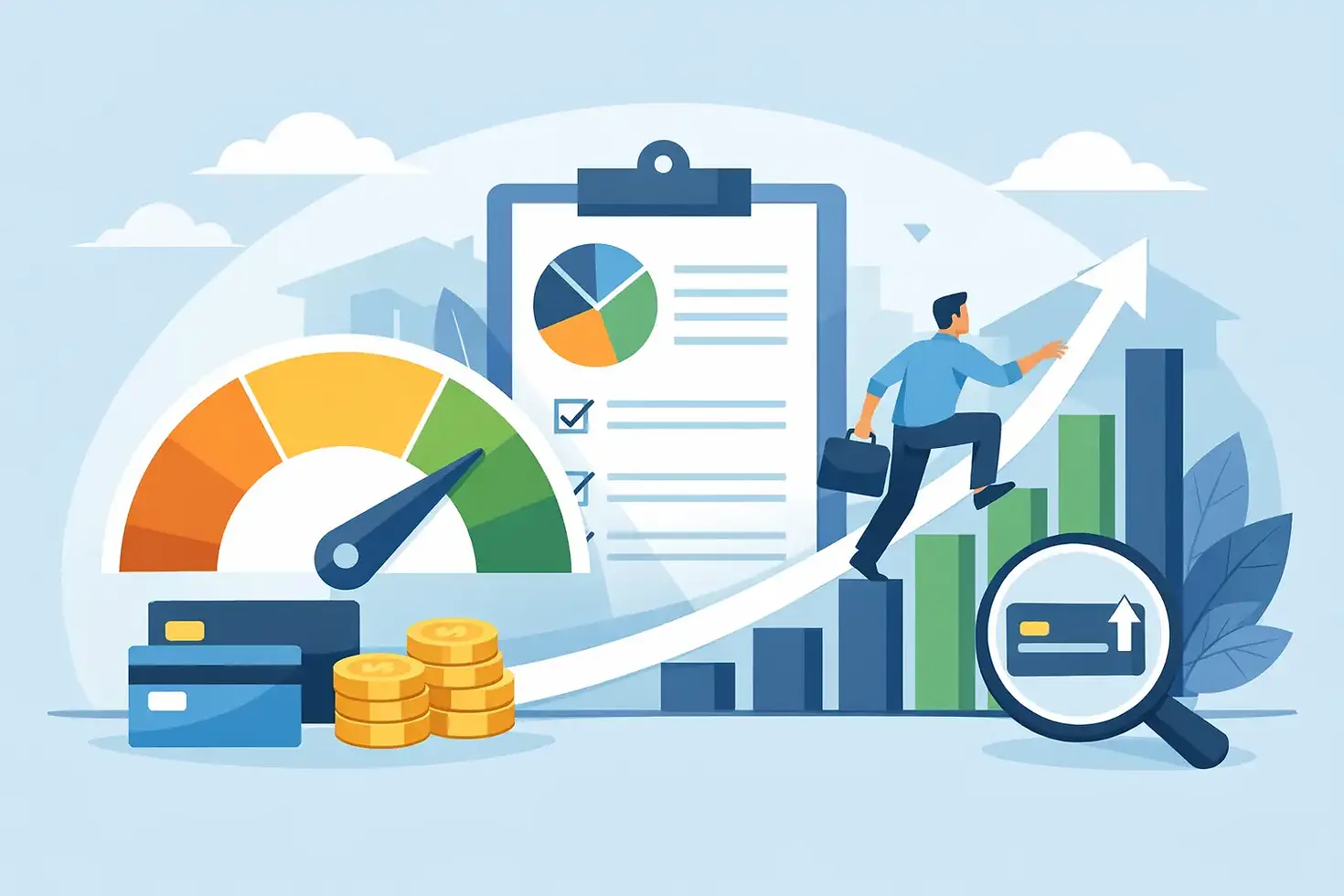
How to Improve Credit Utilization Fast
If your score drops after a big purchase, the problem is often not your payment history - it is your balance-to-limit ratio. That is why people searching for how to improve credit utilization are usually closer to results than they think. Utilization can change quickly, and when it improves, your score can respond faster than it would with many other credit factors.
For anyone trying to get mortgage-ready, qualify for a car loan, or stop overpaying in interest, this matters right now. High utilization tells lenders you may be leaning too hard on your available credit, even if you have never missed a payment. The good news is that this is one of the few credit issues you can often influence in weeks, not years.
What credit utilization actually means
Credit utilization is the percentage of your revolving credit you are using. Revolving credit usually means credit cards and lines of credit, not installment loans like auto loans or mortgages. If you have a card with a $1,000 limit and a $700 balance, your utilization on that card is 70%.
There are two ways utilization is viewed. First, there is card-level utilization, which looks at each account on its own. Then there is overall utilization, which compares all revolving balances to all revolving limits combined. Both can affect your score. That is why someone can have a decent overall ratio but still see damage from one maxed-out card.
As a general rule, lower is better. Many consumers hear that under 30% is the goal, but that is only a starting point. If you are pushing for stronger FICO performance, especially before applying for a mortgage or auto loan, getting much lower than 30% often works better.
How to improve credit utilization without hurting your progress
The fastest way to improve credit utilization is to lower reported balances. That sounds obvious, but the timing matters. Credit card issuers usually report your balance to the bureaus on a statement date, not on your due date. So if you pay after the statement closes, your report may still show a high balance even though you paid on time.
That is why strategic payment timing can make a real difference. If you pay part of your balance before the statement closes, you may reduce the amount that gets reported. For clients trying to move quickly toward financing, this can be one of the simplest score-improvement plays available.
Pay before the statement date, not just the due date
Most people focus on avoiding late payments, and that is essential. But if your goal is optimization, not just staying current, you want to control what balance gets reported. Making an extra payment a few days before the statement closes can lower your reported utilization even if your full payment is not due yet.
This is especially useful if you use your cards heavily for monthly expenses and pay them off later. You may feel responsible because you pay in full every month, but your report can still show high utilization if the balance is captured before your payment posts.
Target the cards with the highest ratios first
If you cannot pay down everything at once, focus on the account that is closest to maxed out. A card at 85% utilization is doing more damage than one at 15%. Bringing the worst account down first can create a faster score response than spreading the same payment evenly across every card.
There is also a psychological win here. One card going from nearly maxed out to manageable can make the entire recovery plan feel more controlled. Momentum matters when you are trying to rebuild credit under pressure.
When a credit limit increase helps
Another answer to how to improve credit utilization is increasing your available credit, but this only works if spending stays under control. If your total balance remains the same and your limit grows, your utilization percentage drops. That can help your score and improve how lenders view your profile.
Still, there are trade-offs. Some card issuers use a soft inquiry for limit increase requests, while others may use a hard inquiry. If you are close to applying for a mortgage, auto loan, or business funding, you do not want to create unnecessary score volatility without a plan.
You also need to be realistic about behavior. A higher limit helps only if it lowers your ratio, not if it becomes an invitation to spend more. For consumers recovering from a rough season, discipline matters more than available credit.
Should you open a new card?
Sometimes opening a new revolving account can improve overall utilization by increasing total available credit. But this is not always the right move. A new account can lower average age of accounts and may involve a hard inquiry. If your file is thin or you are trying to offset high balances far in advance of a future application, it may help. If you are two months from mortgage underwriting, it may be a mistake.
This is where strategy matters more than internet advice. The best move depends on your timeline, your current profile, and what type of financing you are trying to qualify for.
The utilization mistakes that keep scores down
A lot of consumers work hard on their credit and still stay stuck because they fix the wrong problem first. They pay on time, keep old accounts open, and avoid collections, but one or two utilization habits continue to hold the score back.
One common mistake is paying only once per month after the statement posts. Another is maxing out one card for rewards while keeping other cards unused. FICO does not give extra credit for being loyal to one card if that card reports at 90% utilization.
Closing old credit cards is another issue. If you close an account with a zero balance, you may reduce your total available credit and raise your utilization overnight. In some cases closing a card makes sense, especially if fees are involved or the account structure is working against you. But many consumers close accounts thinking it will help, when it actually tightens the ratio.
How to improve credit utilization before a major loan application
If you are preparing for a mortgage, timing becomes more serious. Lenders are not just looking at whether you have improved. They are looking at how stable and lender-friendly your file appears right now. That means utilization should be addressed before your application is pulled, not after.
In many cases, the best approach is to pay balances down aggressively, avoid new charges, and let a cleaner statement cycle report. This is where a structured plan can save time. Instead of guessing which balances to attack first, you review your limits, ratios, statement dates, and approval timeline together.
For homebuyers especially, utilization is not just about score points. It can affect debt-to-income planning, approval odds, and sometimes the loan options available to you. A small scoring change can create a very real difference in rate and monthly payment.
What a strong utilization target looks like
There is no universal magic number, but lower generally performs better. Under 30% is better than over 30%. Under 10% is often stronger for scoring. And having every card report zero can sometimes be less helpful than having one small balance report while the rest report zero.
That said, credit is never one-size-fits-all. If you have derogatory items, collections, recent late payments, or inaccurate reporting, utilization improvement may help but not fully solve the problem. Your score is built from multiple factors, and sometimes the fastest path forward is a broader credit optimization plan.
That is why many consumers benefit from expert review before making big moves. A strong strategy looks at utilization alongside reporting errors, account mix, lender guidelines, and financing goals. The Credit Care Company takes that approach because score improvement should lead somewhere meaningful - better approval odds, lower rates, and a cleaner path to homeownership or funding.
The real goal is control
Learning how to improve credit utilization is not about gaming the system. It is about showing lenders that you can manage available credit without depending on it too heavily. That signal matters whether you are trying to rent a better apartment, buy a car, qualify for a mortgage, or position your business for funding.
If your balances are high today, that does not mean your profile is broken. It means you need a smart plan, the right timing, and clear priorities. Start with what will report next, bring down the highest ratios first, and make decisions based on your financing timeline. A stronger score often starts with a smaller balance, but the bigger win is getting back in control of your options.


Comments